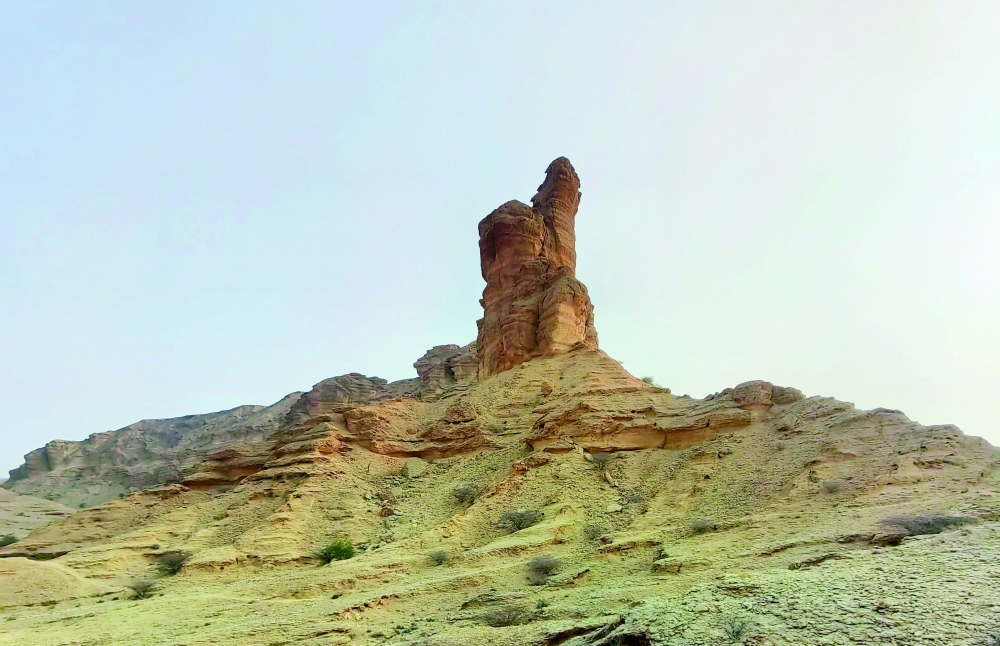





Ever wondered about the gigantic Sphinx-like structure standing head and shoulders above the mountain range in Al Seeb, visible while driving along Muscat Expressway?
During the day, its unusual shape catches the eye. At sunset, it transforms into a mammoth silhouette against the fading sky, leaving many commuters wondering what exactly they are looking at.
Known on social media as ‘Muscat’s Giant’ or the ‘Sphinx Gargoyle’, the striking formation is a natural rock pillar tucked away in an unmarked wadi area near Hayy Al Irfan and the Muscat Expressway.
The formation has become a local point of interest for hikers, trekkers and photographers, despite its rugged surroundings and lack of formal signage. Rough wadi paths, loose sedimentary rocks and uneven terrain make the area an adventurous destination for those keen to explore Muscat’s lesser-known landscapes.
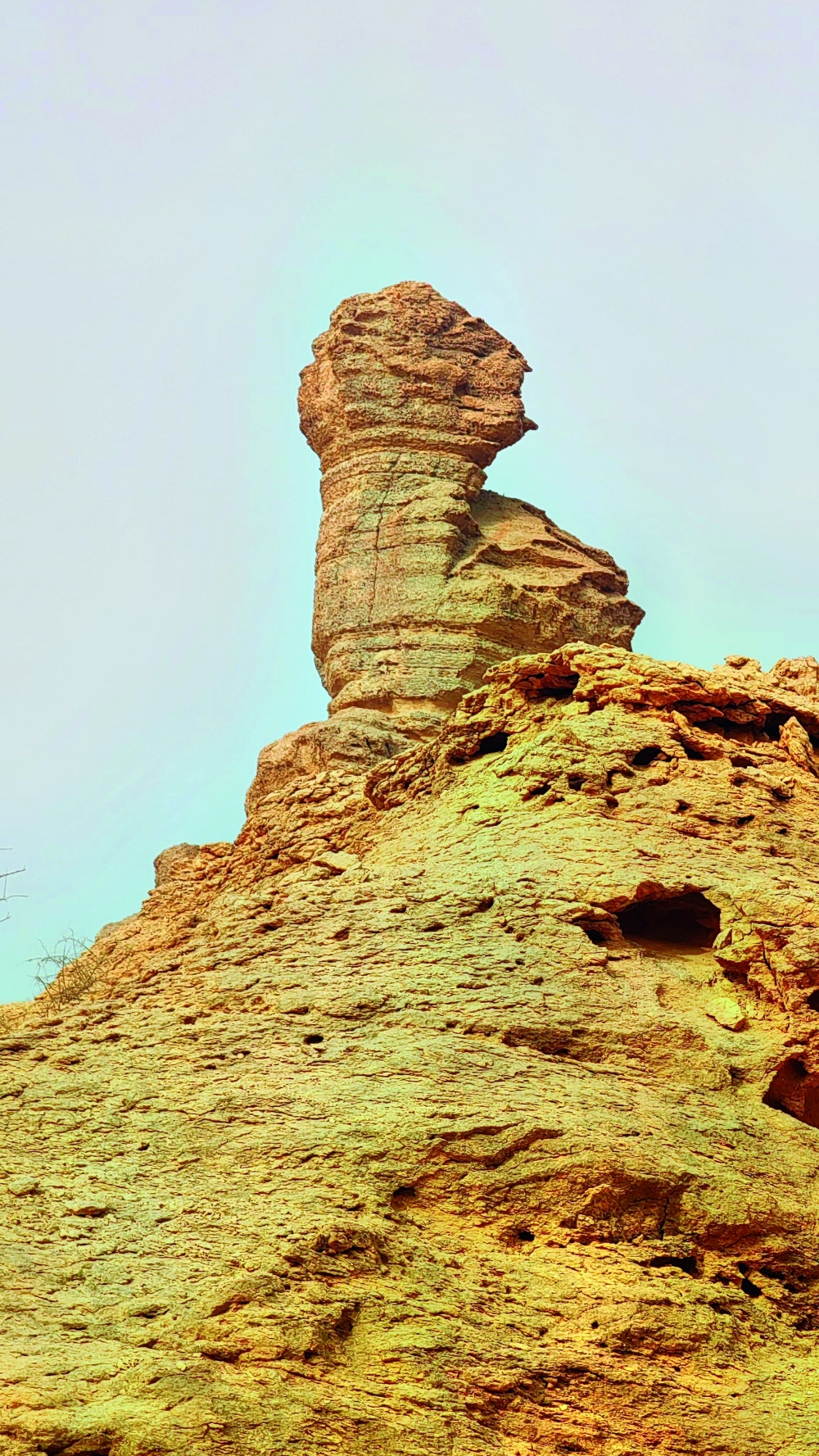
Its resemblance to a Sphinx has naturally inspired comparisons with the famous Great Sphinx of Giza in Egypt, the monumental sculpture traditionally depicted with a human head and the body of a lion.
In ancient Egypt, the Sphinx was associated with royal power and divine protection, with the Great Sphinx believed to represent Pharaoh Khafre. The ancient Greeks had their own interpretation, portraying the Sphinx as a winged female creature associated with the mythical city of Thebes and the famous riddle later answered by Oedipus.
Muscat’s version, however, is entirely a product of nature. Its distinctive form is believed to have been shaped over thousands of years by natural weathering and erosion, with wind and water gradually sculpting the sedimentary rock into the remarkable silhouette visible today.
From certain angles, the formation appears almost like a monumental seated figure, giant or mythical guardian overlooking the surrounding valleys.
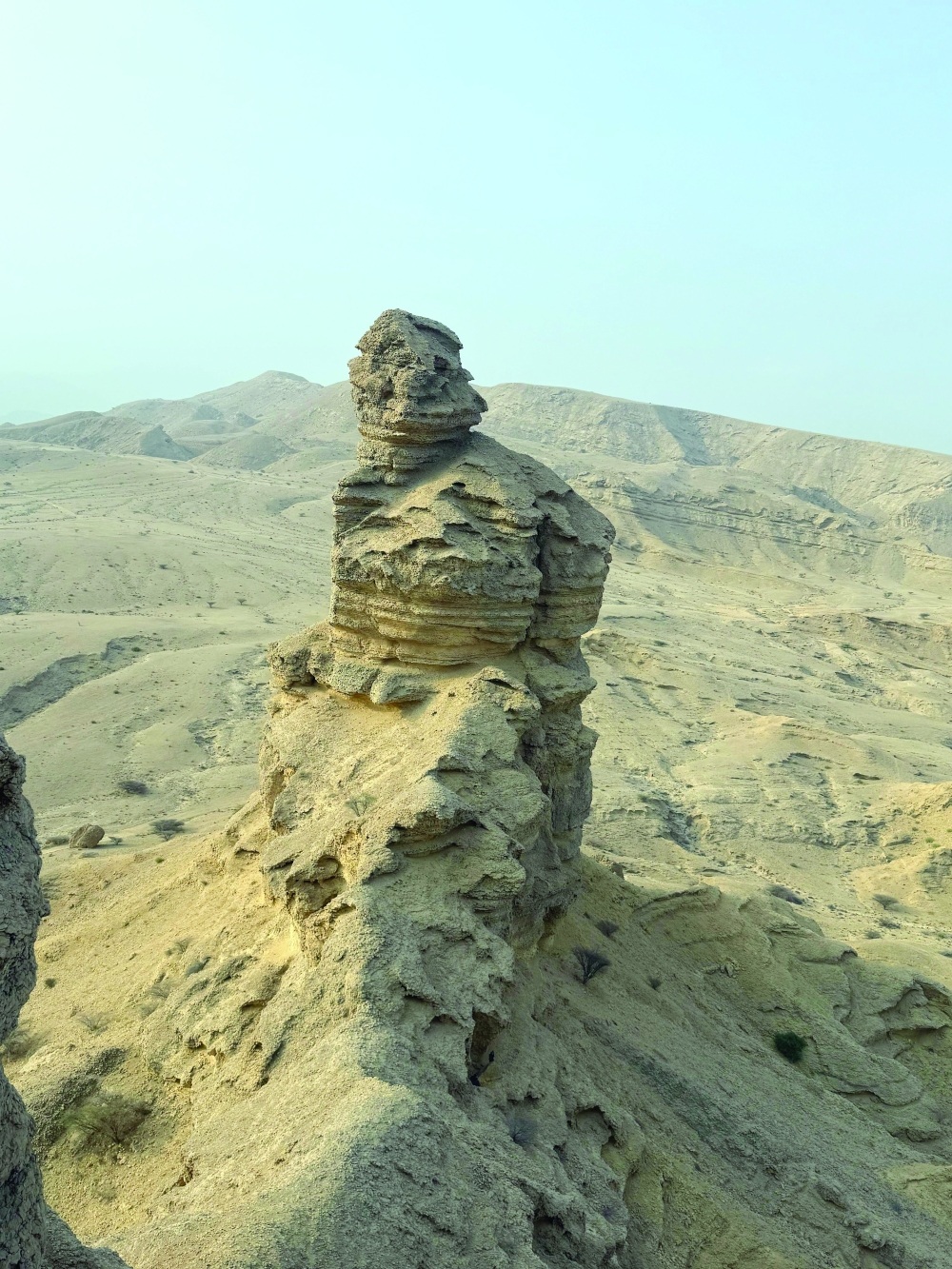
The rock pillar is also associated with the Airport Heights hiking area, where visitors can follow a short trail of roughly 3.2 km. The route offers opportunities for hiking, photography and views of Muscat’s rugged mountain landscape.
For photographers, the formation is particularly striking during the early morning and around sunset, when changing light creates dramatic shadows and accentuates its unusual contours.
Those exploring the area should exercise caution, as the surrounding terrain includes loose rocks, steep sections and uneven wadi paths. Appropriate footwear and careful movement are essential.
Whether viewed as a natural Sphinx, a giant carved by the elements or simply one of Muscat’s intriguing geological landmarks, the formation is a reminder that some of the capital’s most fascinating sights can be found hiding in plain sight.
Oman Observer is now on the WhatsApp channel. Click here